The broker platform for wine & spirits
Five years ago, distributor sales reps carried the brands. Today those teams are 15–20% smaller — and suppliers are turning to brokers, especially fast-growing broker groups, to cover their local markets. Ruby is the platform those broker groups run on.
Why now
distributor sales reps over the last 3–4 years
Fewer feet on the street means suppliers must find representation market by market. Broker groups are filling that gap — most of them on Excel, Google Sheets, and QuickBooks.
The market
On- and off-premise accounts still get worked every week. What changed is who does the work: distributor field teams have thinned out, independent brokers multiplied, and broker groups — whole teams of brokers under one roof — became the growth story of the last few years.
Illustrative. With fewer distributor reps, suppliers are under pressure to find representation in every local market — broker groups are filling the gap, and that's who Ruby is built for.
The platform
How brokers run today
Three tools. Zero connection.
The Ruby broker platform
Reps log every account visit and result in the field. Suppliers see the activity and outcomes behind every payment — so they stay happy with the representation they're paying for.
Before a broker can sell, a lot has to line up: the right supplier conversations, the right brand, the right distributor, a broker assigned. Brand Tracker tracks every step until you're live in the market and ready to sell. See it in action ↓
Invoices flow straight from tracked activity. No re-keying into QuickBooks, no reconciling spreadsheets against payments.
One login. One database. Data goes in once — and reports everywhere.
The Brand Launcher
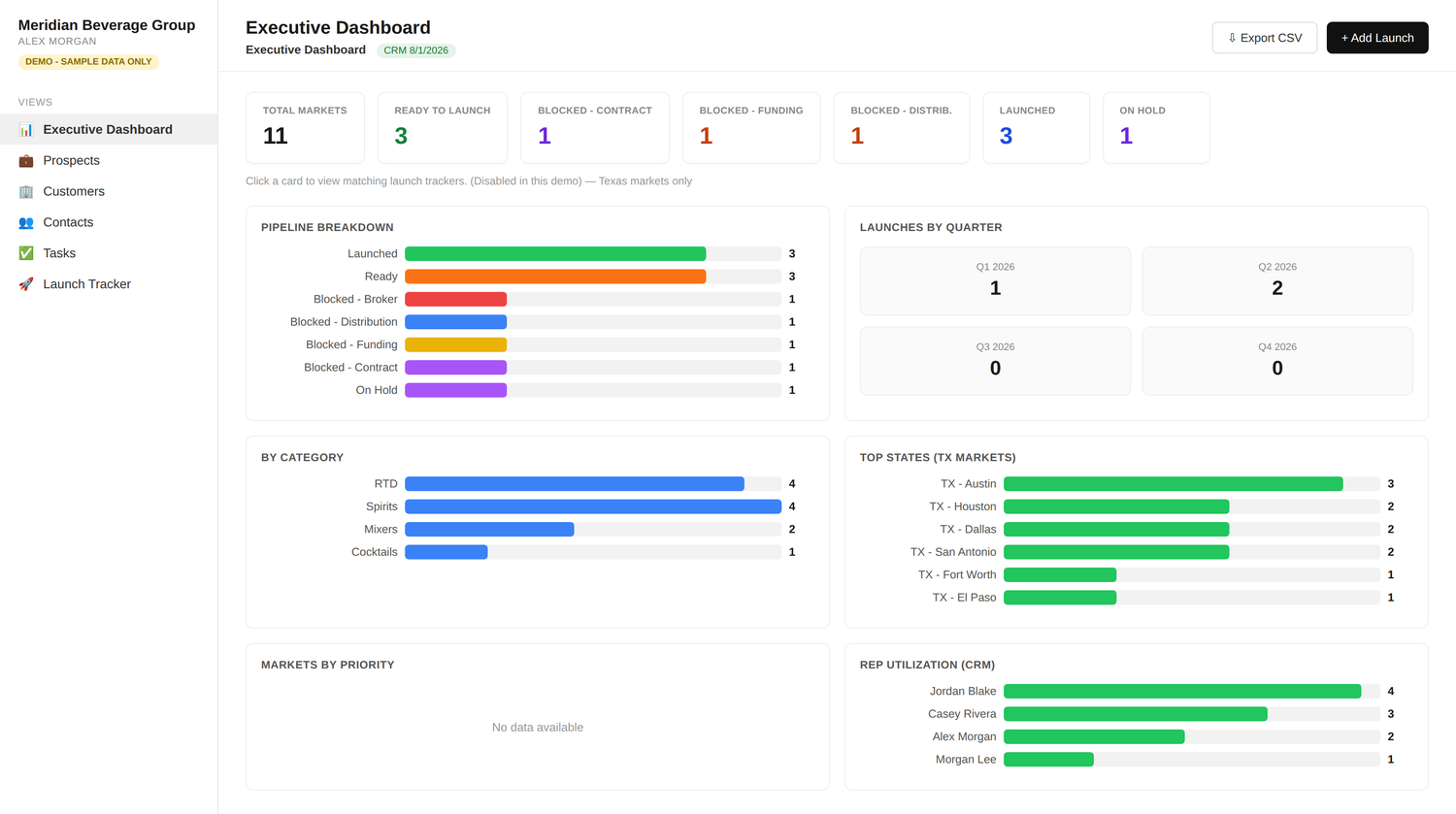
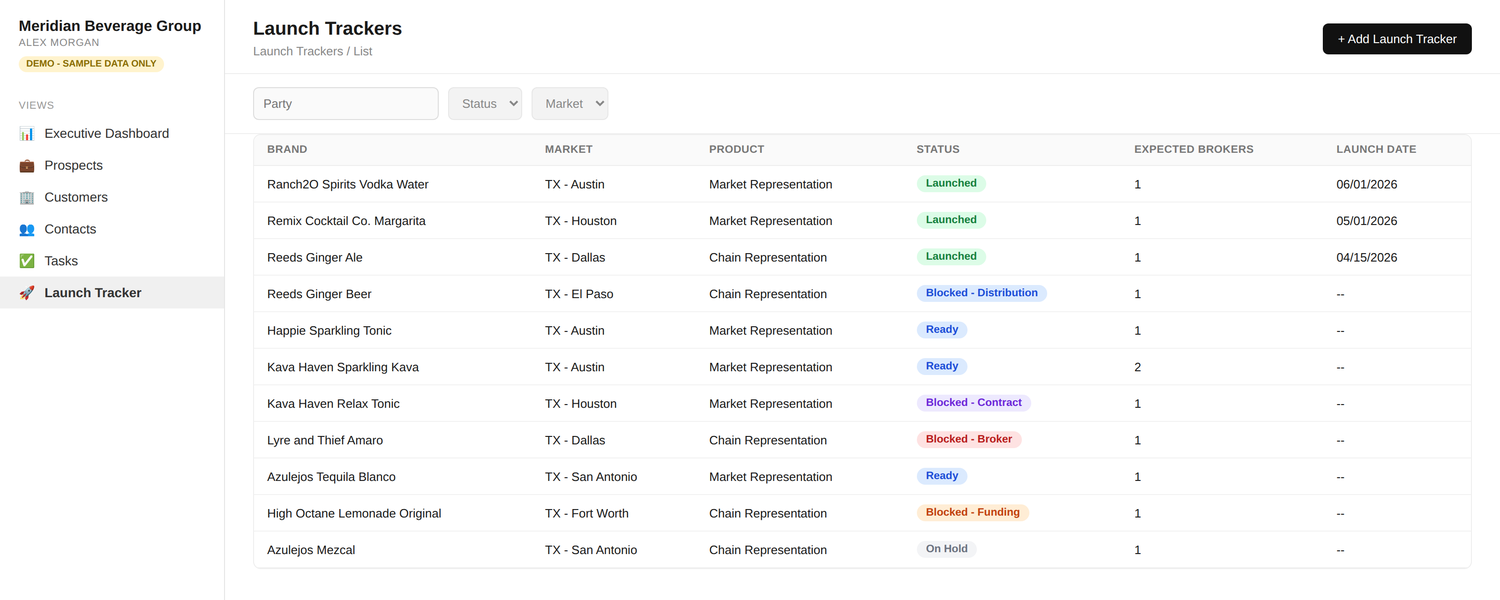
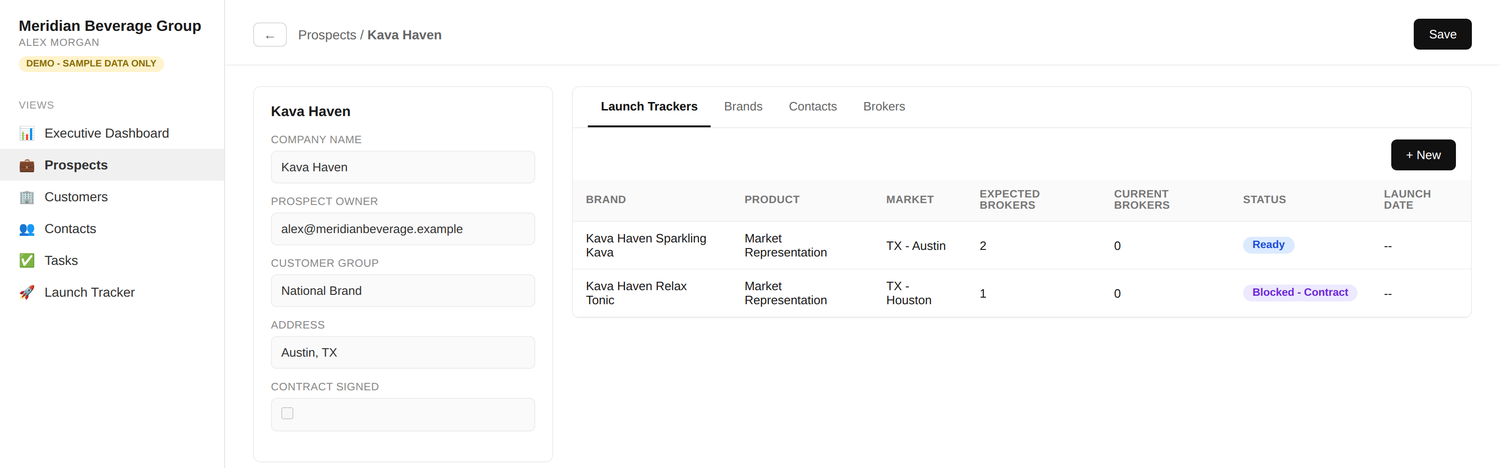
A brand isn't live just because the contract is signed. The contract, the funding, the distributor, the broker assignment — each one can hold up a market, and in a spreadsheet nobody sees which one until it's late. The Brand Launcher gives every brand-market combination a status — Ready, Blocked (Contract, Funding, Distribution, or Broker), Launched, On Hold — so the whole team sees exactly what stands between a brand and its next market.
Eleven Texas markets: three launched, three ready, four blocked, one on hold — broken down by category, market, and rep.
Views from the Brand Launcher demo — demo company, sample data only.
Each row carries its status, expected brokers, and launch date — and each blocker names exactly what's in the way.
Open a supplier and see their brands, contacts, brokers, and every market they're launching into — with the current status of each.
How it works — and why it matters
If you run a broker group, you know the problem: the data your brokers send back is messy. Before anything reaches a supplier, someone spends hours — often nights — reorganizing spreadsheets by hand. With Ruby, the broker enters the data once and the platform does the rest.
Visits, pitches, placements, orders — captured once, in the field, on any device.
Every activity is automatically attributed to the right supplier and brand. No manual sorting, no copy-paste between tabs.
Each supplier sees exactly their brands: the activity, the results, and the wins — sent directly from the platform, beautifully reported.
Billing that matches reality
Broker billing isn't one price on one invoice. You bill each supplier at a different rate — and you may pay each broker differently depending on the supplier they're working. Tracked in QuickBooks and spreadsheets, that's a monthly headache and an easy place to lose money.
Because Ruby already knows who did the work and which supplier it was for, the invoicing and the broker payouts fall out of the same data — consistent, auditable, and easy to manage.
What Ruby keeps straight
Reporting
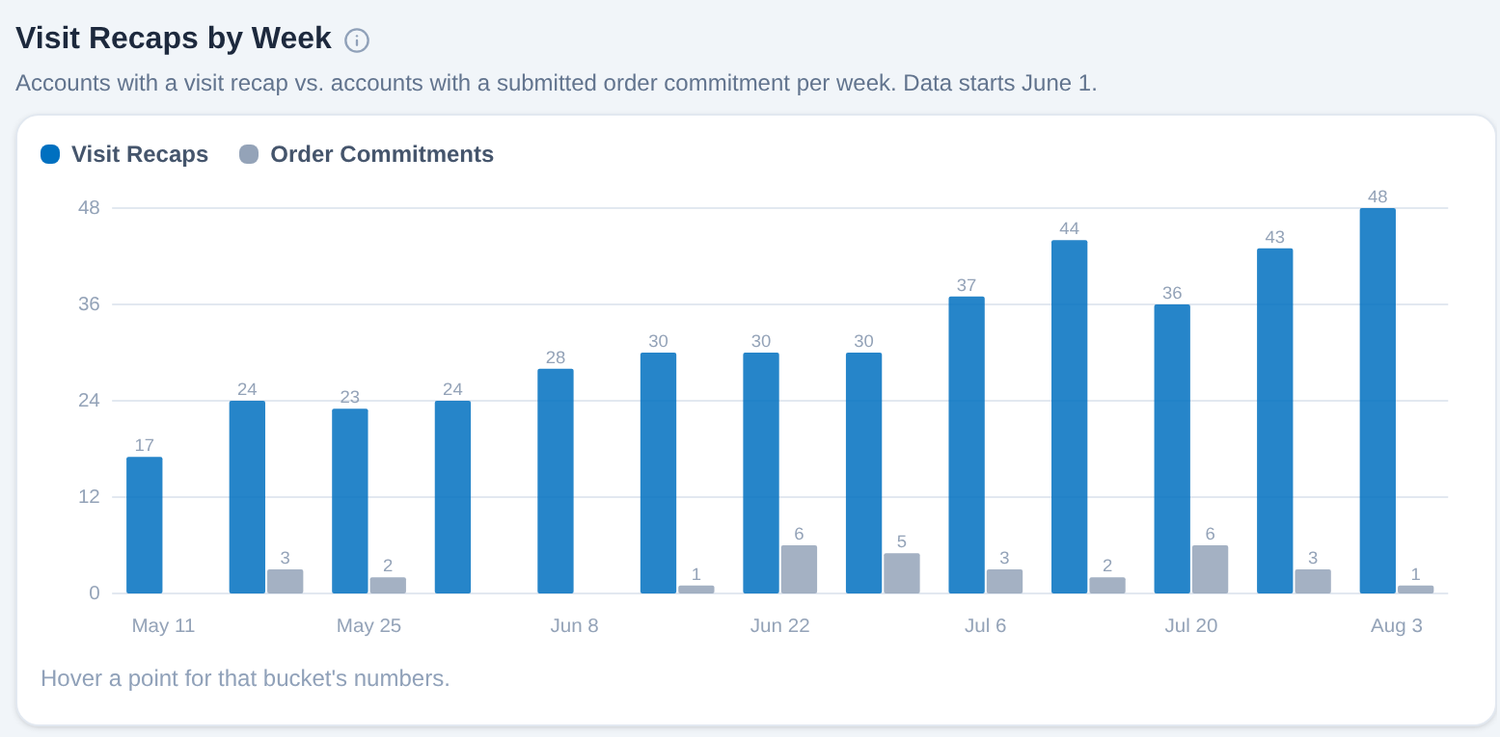
Reporting is what suppliers really want from a broker — proof the market is being worked. Ruby's reporting comes standard: trends over time, a weekly scorecard, and a live sales pipeline, filterable by supplier, brand, state, and rep.
Account activity, in-store wins, goals vs. actual by brand, and the week's case commitments — here filtered to one rep's Texas territory.
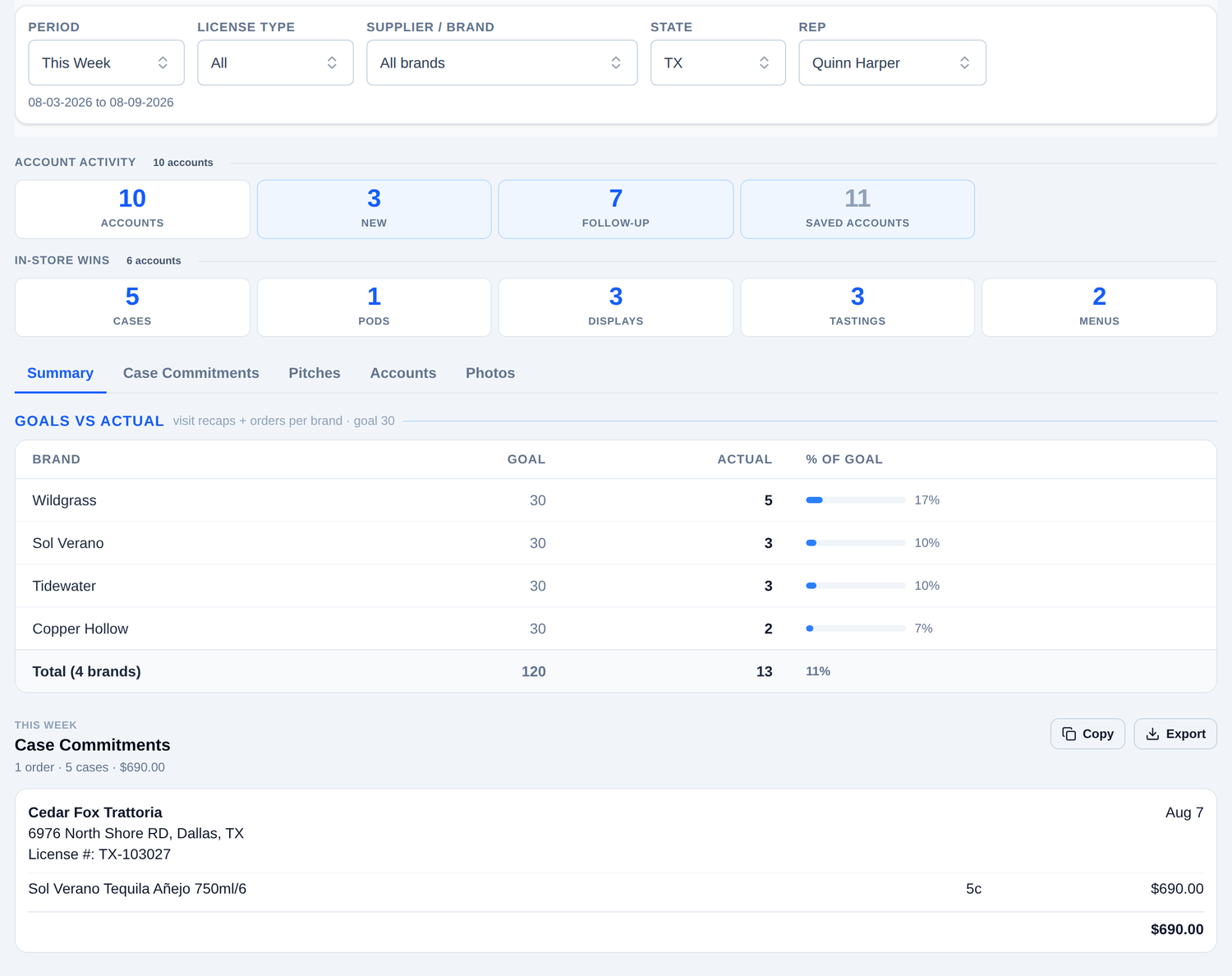
Live view from the Ruby demo environment — demo company, demo data.
Visit recaps vs. order commitments, week by week. Suppliers watch the activity climb.
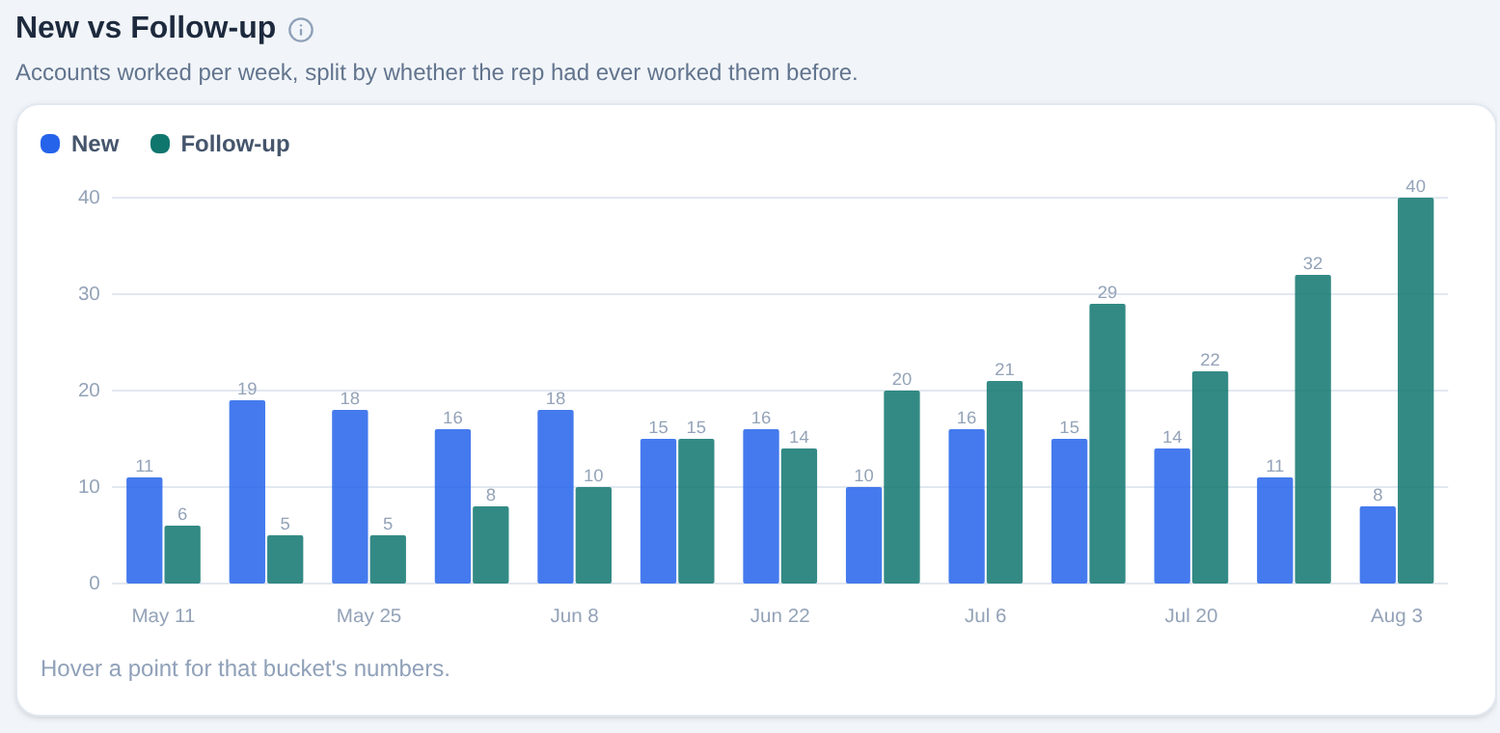
Are reps opening new doors or deepening existing accounts? Both curves, at a glance.
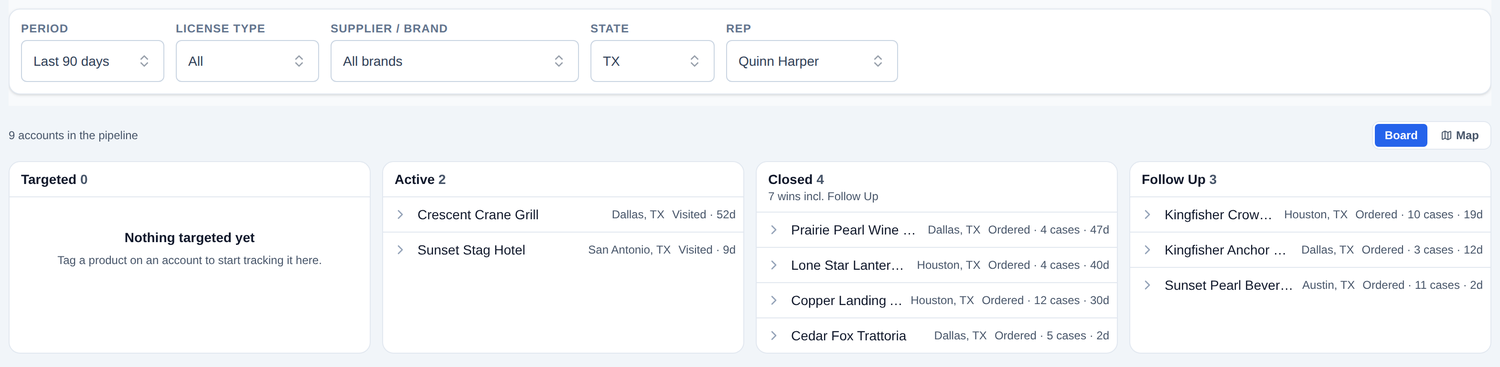
Every account moves through Targeted → Active → Closed → Follow Up — per brand, per rep, per market. This is the view that turns a supplier check-in from “trust me” into “look.”
License Intelligence
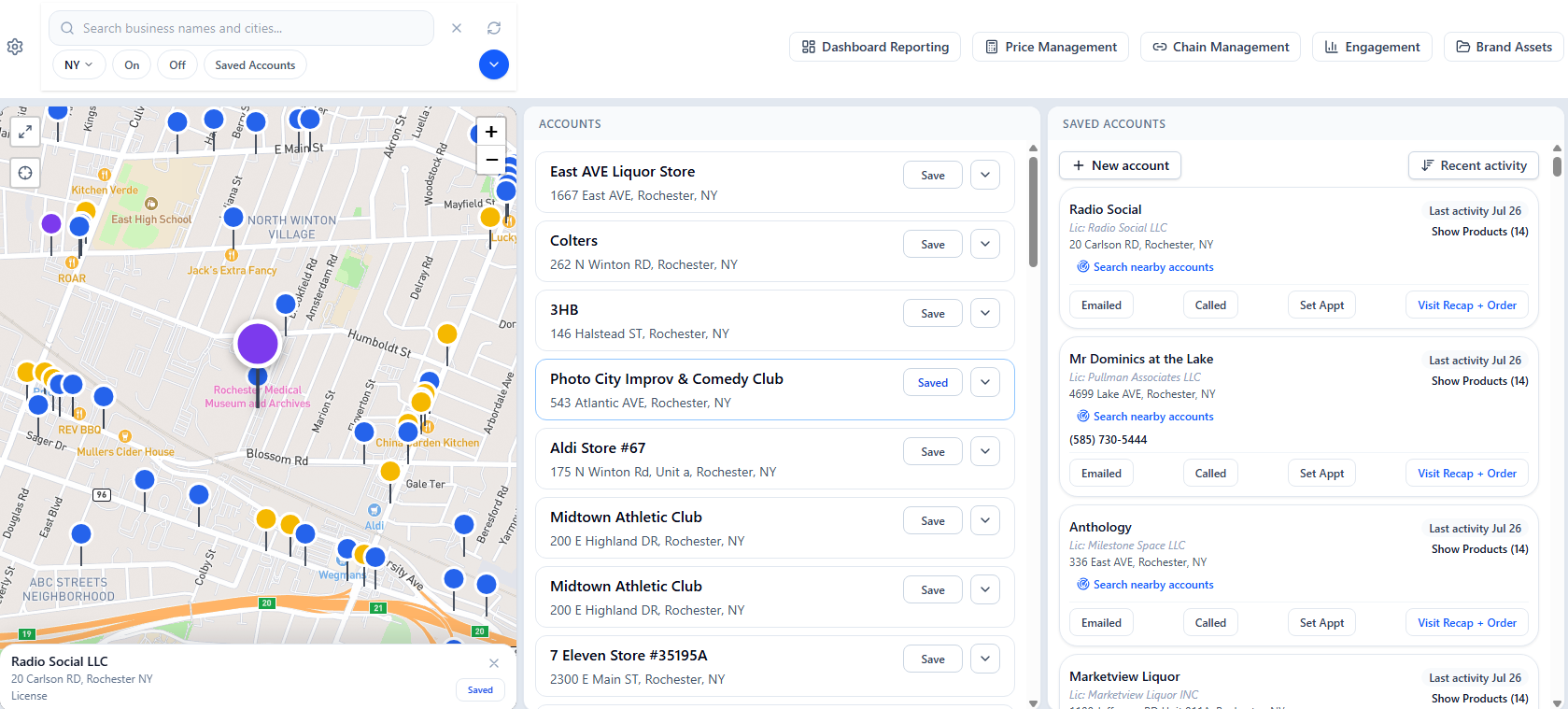
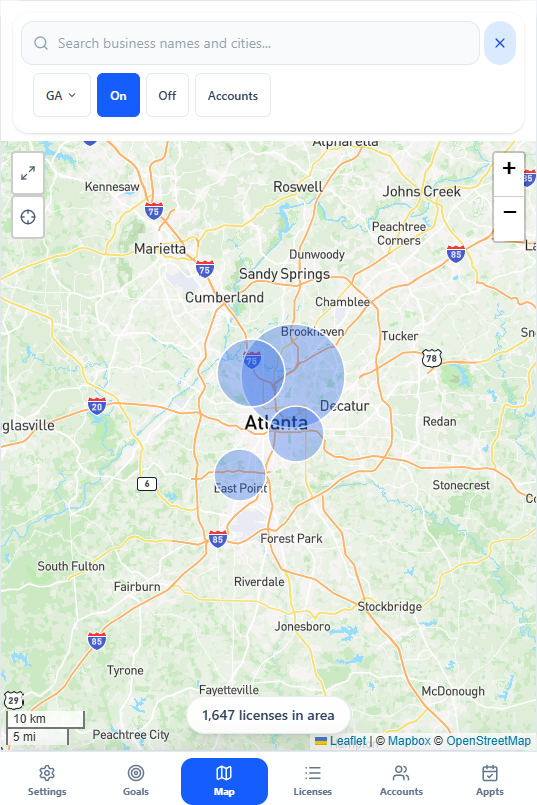
Covering a new market starts with knowing who's out there. intel.rubypro.net puts 350,000+ active on- and off-premise licenses — all 50 states, DC, and Puerto Rico — in every broker's pocket. Save the accounts worth working, link the products you're selling in, and log every order, visit, call, and appointment right where it happens.
Search a market, scan the accounts around you, and keep your saved-account pipeline moving — with Dashboard Reporting, Price Management, Chain Management, Engagement, and Brand Assets one click away.
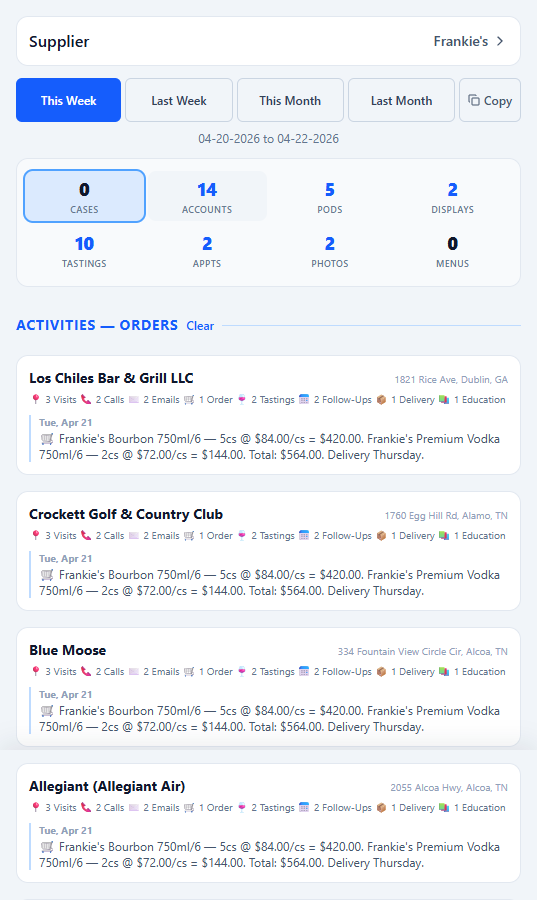
Live views from Ruby's license intelligence platform — account data backed by state license records.
Every dot is an active license. Filter on- vs off-premise, search by name or city — here, metro Atlanta's on-premise accounts.
Filter to one supplier and see the week per account: orders, visits, tastings, displays. Screenshot it, send it — that's the weekly.
Built for the field
See how Ruby replaces the Excel-and-QuickBooks patchwork with one system your brokers — and your suppliers — will actually want to use.
Request a demo